Choosing the right insurance is one of the most important financial decisions you will ever make. Yet many people confuse two major types of coverage: life insurance and health insurance. Understanding Life Insurance vs Health Insurance helps you protect both your family and your finances in the right way.
Although both serve as safety nets, they protect against very different risks. This guide clearly explains the difference, benefits, and how to choose the right one for your needs.
What Is Life Insurance?
Life insurance provides financial support to your family if you pass away. It pays a lump sum (called a death benefit) to your chosen beneficiaries. The purpose is to replace lost income and help your family maintain their lifestyle.
Life insurance is mainly used to:
- Pay off loans and debts
- Cover daily living expenses
- Fund children’s education
- Provide financial security for dependents
There are two main types:
- Term Life Insurance: Coverage for a fixed period (10, 20, or 30 years)
- Permanent Life Insurance: Lifetime coverage with a savings component
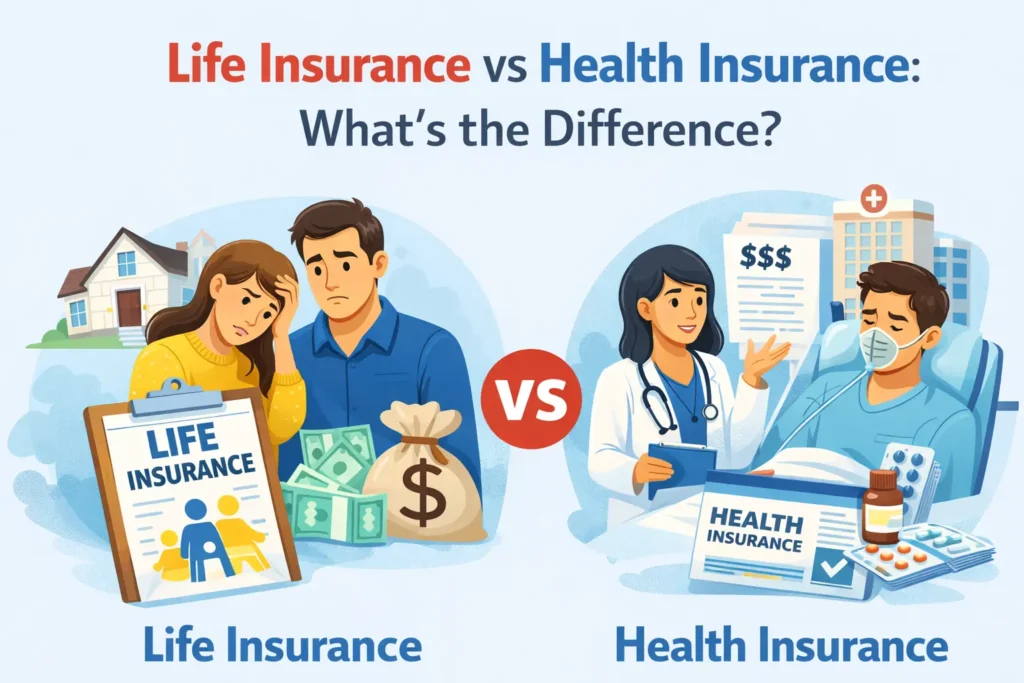
When comparing Life Insurance vs Health Insurance, life insurance focuses on what happens after death, while health insurance supports you while you are alive.
What Is Health Insurance?
Health insurance covers medical costs when you get sick or injured. It helps pay for doctor visits, hospital stays, surgeries, medicines, and tests.
Health insurance usually includes:
- Hospitalization coverage
- Doctor consultation fees
- Emergency care
- Prescription drugs
- Preventive checkups
Some plans also cover maternity, mental health, and long-term care. In the Life Insurance vs Health Insurance comparison, health insurance protects your body and finances during your lifetime.
Life Insurance vs Health Insurance: Key Differences
Here is a simple breakdown of Life Insurance vs Health Insurance:
| Feature | Life Insurance | Health Insurance |
|---|---|---|
| Purpose | Financial support after death | Medical cost coverage |
| Who benefits | Family or beneficiaries | You and your family |
| Payment | Lump sum to family | Pays hospitals or reimburses you |
| When it works | After death | During illness or injury |
| Duration | Fixed term or lifetime | Usually yearly renewable |
This comparison makes it clear that Life Insurance vs Health Insurance serve different but equally important roles.
Why You Need Both
Many people think they must choose one. But in reality, you need both. The Life Insurance vs Health Insurance debate is not about “which is better,” but “how they work together.”
Health insurance:
- Protects your savings from medical bills
- Helps you get treatment without financial stress
Life insurance:
- Protects your family if you are no longer there
- Ensures your loved ones don’t suffer financially
Together, they create complete financial security.
Cost Differences
In Life Insurance vs Health Insurance, cost depends on different factors.
Life insurance cost depends on:
- Age
- Health condition
- Lifestyle habits
- Coverage amount
- Policy type
Health insurance cost depends on:
- Age
- Medical history
- Coverage level
- Network hospitals
- Extra benefits
Health insurance premiums usually increase every year, while life insurance premiums stay fixed in term plans.
How to Choose the Right Coverage
When thinking about , ask yourself these questions:
For life insurance:
- Do I have dependents?
- Do I have loans or debts?
- Would my family struggle without my income?
For health insurance:
- Can I afford big medical bills?
- Do I have family members to cover?
- Do I want cashless hospital treatment?
If the answer is “yes,” you need both.
Also Read:- 5 Insurance Mistakes That Cost People Thousands
Common Myths
Myth 1: Young people don’t need insurance
Truth: Buying early means cheaper premiums in both Life Insurance vs Health Insurance.
Myth 2: Employer insurance is enough
Truth: Employer plans are limited and end when you leave the job.
Myth 3: Life insurance covers medical bills
Truth: Life insurance only pays after death, not during illness.
E-E-A-T: Why This Guide Is Trustworthy
Experience: This guide is based on real-world insurance use where families relied on life insurance after losing income and used health insurance to manage hospital bills.
Expertise: The information follows standard insurance industry practices and financial planning principles.
Authoritativeness: The content aligns with advice given by financial advisors, insurers, and consumer protection agencies.
Trustworthiness: The goal is education, not selling—so you can make informed decisions confidently.
Final Thoughts
The choice between Life Insurance vs Health Insurance is not an either-or decision. Life insurance protects your family’s future, while health insurance protects your present health and savings. Both are essential parts of a smart financial plan.
If you want peace of mind, stability, and long-term security, make room for both in your life.
Frequently Asked Questions (FAQ)
1. What is the main difference between life insurance and health insurance?
The main difference in Life Insurance vs Health Insurance is that life insurance pays your family after your death, while health insurance pays for medical expenses during your life.
2. Can life insurance replace health insurance?
No. Life insurance cannot pay hospital bills. It only pays after death.
3. Is health insurance more important than life insurance?
Both are important for different reasons. Health insurance protects your health and money now, life insurance protects your family later.
4. Do I need both if I am single?
Health insurance is a must. Life insurance is still useful if you have debts or plan to support family in the future.
5. When should I buy life insurance?
The earlier you buy, the cheaper it is. Young age means lower risk and lower cost.
6. When should I buy health insurance?
As soon as possible. Medical costs rise every year, and health problems can come anytime.