Table of Contents
Motor insurance is not just a legal requirement—it is a vital financial safety net for every vehicle owner. Whether you drive a car, ride a bike, or own a commercial vehicle, having the right insurance policy protects you from unexpected losses and legal trouble. In this article, we explain the meaning of motor insurance, its types, and why it is mandatory, in a simple and easy-to-understand way.
What Is Motor Insurance?
Motor insurance is a contract between a vehicle owner and an insurance company. Under this agreement, the insurer provides financial protection against losses arising from road accidents, theft, natural disasters, fire, or third-party liabilities, in exchange for a premium paid by the policyholder.
In simple words, motor insurance helps cover repair costs, medical expenses, and legal liabilities that may occur due to an accident involving your vehicle. Without proper coverage, these expenses can be financially overwhelming.
Why Is vehicle insurance Mandatory?
Motor insurance is mandatory because road accidents can cause serious harm to people and property. Governments across the world have made at least third-party insurance compulsory to protect victims of road accidents.
Key reasons why motor insurance is mandatory:
- Legal compliance
Driving without valid motor insurance is illegal and can result in fines, penalties, or even imprisonment in some countries. - Protection for third parties
If your vehicle causes injury, death, or property damage to others, insurance ensures victims receive compensation. - Financial security
Accidents can lead to heavy repair bills and medical costs. Insurance prevents sudden financial burdens. - Responsible driving ecosystem
Mandatory insurance promotes accountability and safer road behavior among drivers.
Types of Motor Insurance
There are different types of motor insurance policies available, each offering a different level of protection.
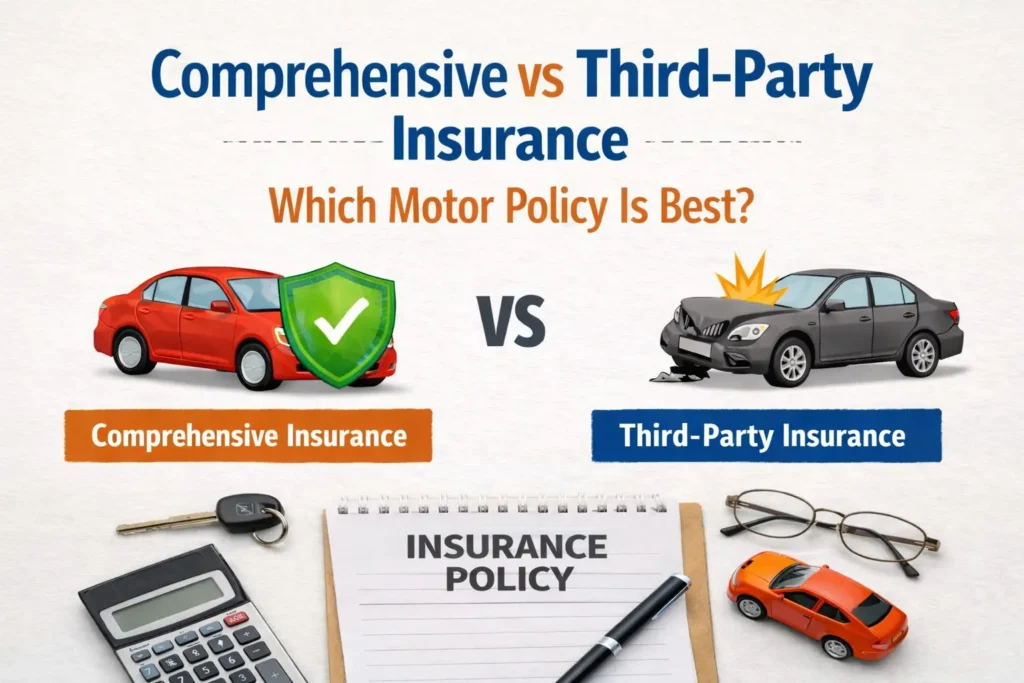
1. Third-Party vehicle insurance
Third-party motor insurance is the minimum coverage required by law. It covers:
- Injury or death of a third person
- Damage to third-party property
However, it does not cover damage to your own vehicle. This policy is affordable and suitable for older vehicles with low market value.
2. Comprehensive Motor Insurance
Comprehensive motor insurance offers wider protection. It includes:
- Third-party liability coverage
- Damage to your own vehicle due to accidents
- Theft, fire, vandalism
- Natural disasters such as floods or earthquakes
This type of motor insurance is ideal for new or high-value vehicles.
3. Standalone Own-Damage Insurance
This policy covers damage to your own vehicle but does not include third-party liability. It is usually purchased along with third-party insurance for complete coverage.
Benefits of private vehicle insurance
Having motor insurance offers several important benefits beyond legal compliance.
- Covers repair and replacement costs
- Provides peace of mind while driving
- Protects savings from unexpected expenses
- Offers add-ons like roadside assistance
- Supports cashless repairs at network garages
Motor insurance also allows you to earn a No Claim Bonus (NCB), which reduces premiums if no claims are made during the policy period.
Also Read : Life insurance 2026: Complete Buyer’s Guide
Factors That Affect Motor Insurance Premium
The cost of private vehicle insurance depends on several factors, including:
- Type and age of the vehicle
- Engine capacity
- Insured Declared Value (IDV)
- Driving history and claim record
- Add-on covers selected
- Location and usage of the vehicle
Understanding these factors helps you choose the right policy at the best price.
How to Choose the Right Motor Insurance Policy
Choosing the right private vehicle insurance requires careful evaluation. Here are a few expert tips:
- Compare policies online from multiple insurers
- Check claim settlement ratio of the insurer
- Choose coverage based on vehicle value and usage
- Avoid unnecessary add-ons
- Read policy exclusions carefully
A well-chosen car insurance policy balances affordability with adequate coverage.
EEAT: Why You Can Trust This Information
This article is written with EEAT principles in mind:
- Experience: Based on real-world insurance buying and claim scenarios
- Expertise: Explains insurance concepts clearly and accurately
- Authoritativeness: Follows standard insurance laws and practices
- Trustworthiness: Transparent, unbiased, and consumer-focused information
Always verify policy details directly with licensed insurance providers before purchase.
Frequently Asked Questions (FAQ)
1. Is private vehicle insurance compulsory for all vehicles?
Yes, at least third-party car insurance is compulsory for all vehicles driven on public roads.
2. What happens if I drive without private vehicle insurance?
Driving without valid car insurance can result in fines, license suspension, or legal action depending on local laws.
3. Can I buy private vehicle insurance online?
Yes, you can easily buy or renew car insurance online with instant policy issuance and digital documents.
4. What is the validity of private vehicle insurance?
car insurance policies are usually valid for one year, though long-term policies are also available.
5. Does car insurancecover natural disasters?
Comprehensive car insurance covers damages caused by floods, earthquakes, storms, and other natural calamities.
Conclusion
car insurance is more than a legal formality—it is a crucial safeguard for vehicle owners and society as a whole. Understanding the meaning, types, and importance of car insurance helps you make informed decisions and stay protected on the road. By choosing the right policy, you ensure financial security, legal compliance, and peace of mind every time you drive.